First identify the correct township
The local mailing name does not by itself establish whether the property lies in Abington Township or Cheltenham Township. The owner or contractor should confirm the municipality before using a permit office or assuming one set of rules applies.
Abington requires permits for installation, replacement, or modification involving plumbing pipes, fixtures, and drains. Roofing and siding work also requires permits there. Cheltenham work may follow different requirements.
- Confirm the municipality for the property.
- Ask the repair contractor which permit applies.
- Keep the permit number with source repair records.
- Do not describe extraction as plumbing replacement.
Protect the space while permit questions are resolved
An accessible shutoff may stop safe active flow. Occupants should avoid wet electrical components, loose ceilings, sewage, and slippery floors. A qualified plumber addresses the failed pipe or fixture.
The Glenside extraction service can document standing water and affected materials without deciding how the plumbing repair is permitted. These assignments can be coordinated while retaining separate responsibilities.
- Photograph the source and original water edge.
- Report whether flow is active.
- Move only dry portable items through a safe route.
- Preserve the failed component for professional inspection.
Map water beyond the repair opening
A plumbing opening identifies access to the source, not the full water boundary. Liquid may move beneath flooring, behind trim, across wall plates, or to a lower level. Technicians check connected rooms and elevations.
Readings at repeatable locations create a material map. This evidence explains why extraction extended through a doorway or why limited access was needed away from the repaired pipe.
- Check both sides of shared walls.
- Inspect floor transitions and fixed cabinets.
- Include ceilings below an upper release.
- Compare affected material with a suitable dry reference.
Separate plumbing correction from mitigation
The plumbing contractor diagnoses the component, performs permitted work where required, and records the repair. The mitigation team removes water, assesses affected materials, creates necessary drying access, and tracks moisture.
Structural drying begins after recoverable liquid and unsafe material are addressed. Equipment supports the retained assembly rather than replacing pipe correction.
- Keep plumbing invoices in their own section.
- List mitigation openings separately.
- Record equipment by room and purpose.
- Identify reconstruction as a later stage.
Use daily readings to direct the setup
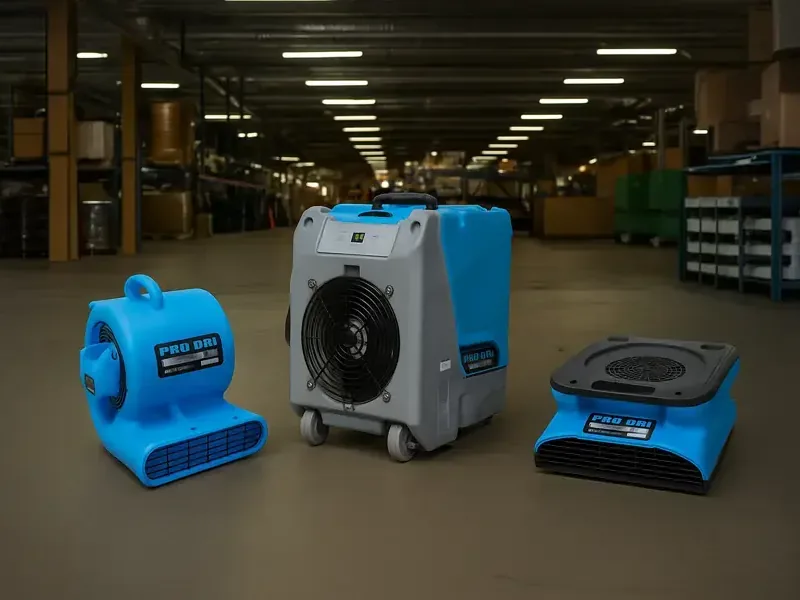
Air movement and dehumidification work together, but placement depends on exposed material and room conditions. Technicians revisit the same points and document how each area changes.
When one cavity stays elevated, better access or a placement change may be needed. When another reaches a stable comparison, equipment can move. The record should explain the reason rather than merely list dates.
- Label each material point.
- Record temperature and humidity.
- Protect unaffected rooms from airflow and debris.
- Confirm all levels before removing equipment.
Build a handoff that survives later questions
The closeout lists the source finding reported by the plumber, water boundary, extraction, material decisions, drying record, final readings, and remaining repair. Permit documents stay connected to the plumbing work.
The service area page reflects the local municipal context. Clear separation helps an owner, contractor, or carrier understand which work occurred without implying that a permit determines coverage or workmanship.
- Include first and final photographs.
- Attach source repair and permit records.
- Name every remaining finish task.
- Leave coverage decisions to the policy and carrier.
Manage openings so each trade can explain its work
A plumber may need access to a pipe, while the mitigation team may need a different opening to remove water or expose a damp cavity. Coordinating those needs can reduce unnecessary disruption, but each opening still requires its own reason. One should not be described as permit work merely because it occurred near plumbing.
Before work begins, photographs show the finish and suspected route. After access, the responsible trade records what was found. Mitigation notes identify water condition and material moisture, while plumbing notes identify the component and correction. The repair contractor later receives a clear description of surfaces left open.
This separation also helps when the source is near a fixture that will be relocated or changed. The permit question follows the plumbing scope under the correct township rules. Extraction and drying continue to follow affected materials and safe working conditions.
Good coordination also protects the inspection path. A finish should not be closed before the relevant plumbing inspection and moisture handoff are complete. The repair schedule can identify those dependencies without the mitigation provider interpreting municipal approval.
At completion, the owner should be able to see the source correction documents, permit or inspection records when applicable, mitigation photographs, material readings, and reconstruction proposal as separate items. Together they explain the project while preserving who was responsible for each decision.
- Label each opening by room and purpose.
- Name the trade that created it.
- Photograph conditions before and after access.
- Keep permit inspection results with plumbing records.
- List finish closure as reconstruction, not mitigation.