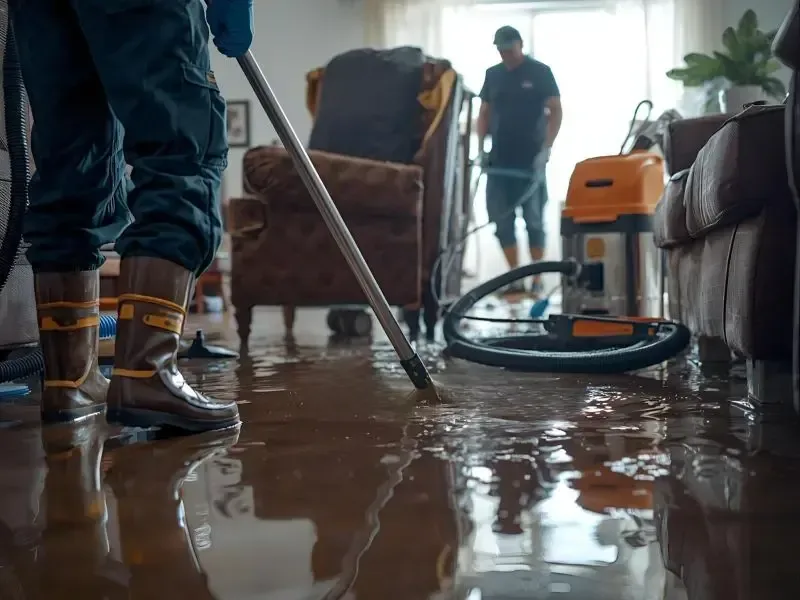
Start with the building rather than the creek name
The inspection follows visible water marks at doors, foundation joints, windows, roofing, and drains. The first inspection records where water was visible, which direction it appeared to move, and what indoor materials touched it.
Glenside occupies parts of Cheltenham Township and Abington Township. That municipal split matters for later repair questions, but the immediate flood cleanup process still rests on the observed water route and the condition of the rooms.
- Photograph exterior collection points without entering moving water.
- Mark the visible indoor edge before people walk through it.
- Record doors, floor joints, drains, and wall bases along the route.
- Keep a separate note for rain, plumbing, or roof observations.
Treat outside water as a material and safety problem
Water that crossed soil or pavement is different from a recent sanitary supply release. It may carry debris and contaminants into porous flooring, wallboard, insulation, or stored goods. Occupants should stay outside the affected area, especially where electrical equipment, loose finishes, or sewage may be present.
The response team identifies a safe equipment route and keeps unaffected rooms separated. Recoverable items are photographed before movement. Porous materials are assessed according to contact, condition, and cleanability rather than appearance alone.
- Avoid wet electrical devices and extension cords.
- Do not move contaminated contents through dry living areas.
- Leave unstable flooring or sagging finishes undisturbed.
- Use controlled removal when a porous material cannot be cleaned safely.
Build a moisture map before extraction changes the evidence
Open water is only the visible portion of the loss. Moisture can continue under finish flooring, behind base trim, beneath cabinets, and through a doorway. Readings at repeatable locations show where conditions differ from suitable dry references.
A diagram labels each room, material, and elevation. Photographs connect the diagram with the actual surfaces. This record explains why the crew extended the boundary past a puddle or created limited access at one wall base while retaining another area.
- Check both sides of a shared wall when the route supports it.
- Compare floor edges with suitable unaffected material.
- Include lower rooms when water entered from above.
- Record every opening and the condition found behind it.
Extraction, cleaning, and drying solve different parts
Extraction removes accessible liquid and lowers the moisture load. Cleaning addresses residue and contamination on materials suitable to remain. Drying uses air movement and dehumidification after unsafe or unsalvageable material has been handled. One machine cannot replace that sequence.
The structural drying service tracks retained floors, walls, and framing with repeated measurements. Equipment placement changes when a cavity responds slowly or when another section reaches its comparison target.
- Recover liquid before relying on evaporation.
- Clean retained hard surfaces according to water condition.
- Expose trapped layers only where inspection supports access.
- Revisit the same marked points during monitoring.
Connect the outdoor water path with indoor findings
Tacony Creek is part of the Delaware River Basin. After water enters a building, the cleanup team records the entry point, residue, and affected rooms. The removal, cleaning, and drying plan follows those observations. Property owners can check the applicable flood map when reviewing flood-zone information.
A property level conclusion needs a current map, an inspection, and evidence from the event. This distinction prevents a broad geographic statement from replacing the source investigation. It also keeps the cleanup file focused on what was seen and measured.
- Use official property mapping for an address level flood question.
- Keep weather notes separate from statements about entry.
- Record debris, water marks, and visible exterior flow paths.
- Update the loss diagram when new material findings appear.
Close the work with a room by room handoff
The closing record compares the first boundary with final material conditions. It lists what was removed, cleaned, retained, and left for repair. Source correction by another trade remains a separate entry.
The Glenside service area includes different municipal contexts, so permits for later plumbing or roofing work depend on the correct township. The mitigation handoff lists the repairs that need a township permit check.
- Include wide room photographs and close material views.
- List final readings at the original marked locations.
- Name remaining finish and source repair tasks.
- Keep carrier decisions separate from mitigation observations.
Questions to preserve for the first site conversation
A concise first report helps the inspection start with facts. The owner can identify when water was first noticed, whether it is still entering, which rooms are involved, and whether electricity, sewage, or unstable finishes are present. It is better to describe an observed doorway or wall edge than to name an unsupported creek source.
The report can also identify photographs already taken, repair personnel already contacted, and changes since discovery. These details help preserve sequence. They do not require the owner to diagnose hidden materials, contamination, or coverage before trained inspection.
A useful handoff also describes uncertainty directly. If the exterior source has not been established, the record can say that investigation remains open while still documenting every indoor action. That wording is more accurate than choosing a creek, drain, or foundation explanation before the supporting evidence exists.
Owners can preserve invoices and findings from drainage, roofing, or plumbing professionals beside the mitigation file. When those records use consistent room names and dates, the eventual repair team can connect source correction with the exact interior surfaces that were cleaned or dried.
- State what is visible and where it appears.
- Describe active hazards before discussing contents.
- List source control or temporary protection already completed.
- Keep assumptions about a creek, drain, or pipe separate from observations.