Use Pennypack Creek as context, not a diagnosis
A community water feature can influence drainage patterns without touching a specific building. Rain may also collect from a roof, paved area, doorway, window, grading condition, or drain. The inspection begins by tracing physical evidence rather than selecting a cause from a map.
The Hatboro flood cleanup service records exterior observations and the indoor route separately. Photographs pair exterior water marks with the affected rooms, helping the owner follow the cleanup scope.
- Photograph visible exterior collection and entry points.
- Record rainfall timing alongside visible entry marks.
- Mark the indoor edge before extraction changes it.
- Use address specific official mapping for flood zone questions.
Protect people before moving water or contents
Outside water may have crossed soil, pavement, waste, or other unknown material. Occupants should remain outside the wet area and avoid electrical equipment, unstable finishes, and hidden floor changes.
Dry portable belongings can move through a protected route after their original position is recorded. Items touched by unsafe water require a separate handling decision so contamination is not carried into unaffected rooms.
- Restrict doors that lead into the affected section.
- Do not use household fans across unsafe water.
- Leave heavy wet furnishings until a safe movement plan exists.
- Keep children and pets away from equipment and debris.
Map the building from the entry side inward
The visible puddle does not define the full boundary. Water may continue under flooring, behind trim, around fixed cabinets, or into an adjoining room. Readings establish differences at floor edges and wall bases.
The map identifies rooms, materials, elevations, and suitable references. It also records which openings were needed to evaluate a concealed layer. A York Road or Moreland Avenue location supplies access context only; it does not predict the floor or foundation present.
- Check thresholds on both sides of the doorway.
- Measure wall bases beyond the visible stain.
- Inspect the level below when the route supports it.
- Label every test location for later comparison.
Removal and cleaning follow water contact
Accessible liquid is extracted with tools suited to the surface. Porous material that cannot be cleaned safely may need controlled removal, while durable retained surfaces receive appropriate cleaning before drying.
Water condition, time wet, attachment, damage, and accessibility shape the decision. The structural drying page covers retained materials after the initial water and debris are addressed.
- Recover liquid before increasing evaporation.
- Bag discarded material through a protected route.
- Clean tools before they leave the affected zone.
- Document the condition found beneath removed finishes.
Drying requires repeat points across the whole map
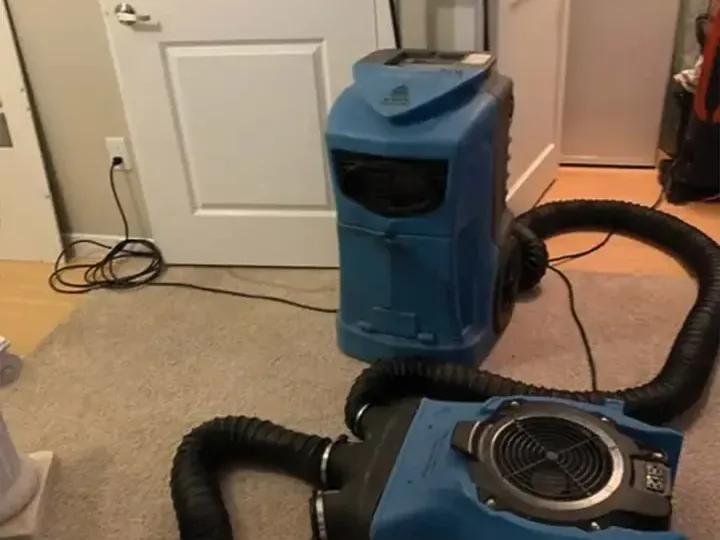
Air movement and dehumidification support materials suitable to remain. Equipment is arranged around exposed surfaces and kept from spreading contaminants or disturbing loose finishes.
Technicians revisit the labeled points and adjust access or placement when one section responds differently. A dry looking surface is not enough if a floor edge, cavity, or wall base remains elevated.
- Record equipment locations by room.
- Track room conditions alongside material readings.
- Compare each material with a suitable reference.
- State why a device was moved or removed.
The handoff keeps drainage work separate
Closing documentation lists the original boundary, extraction, removal, cleaning, equipment, final readings, and remaining repairs. Drainage changes, plumbing work, and reconstruction belong to their own scopes.
The Hatboro service hub also explains other water sources, including pipe and roof losses. Keeping source evidence distinct helps prevent every outside-water event from being attributed to the creek.
- Include final photographs of entries and room edges.
- List retained and removed materials.
- Identify repair needs without predicting cost or coverage.
- Keep a carrier decision separate from field observations.
Create a practical record for contents and stored belongings
Outside water often reaches belongings before the full building boundary is understood. The first contents record should show where an item sat, whether water contacted it, and whether it blocks access to a floor or wall. Moving everything into one pile erases that context and can transfer moisture into a dry section.
Durable objects may be cleaned, while absorbent items require a closer decision based on water condition and material. Important papers, electronics, and specialty goods may need a qualified contents provider. The mitigation crew should avoid making unsupported promises about restoration value or insurance treatment.
A simple zone label connects each item with its original room. Photographs taken before and after movement support that record. Discarded property should have owner authorization when circumstances allow, and the disposal note should identify the item group without inventing a replacement value.
A contents list can remain simple and factual. Room, item description, contact condition, movement destination, and authorization are often more useful than a broad label such as damaged. Photographs add a visual record of each item and its condition before it moves.
After the work zone is clean, stored items should return only when the space is ready and their condition supports it. Bringing damp boxes back against a newly dried wall can create another moisture problem and obscure whether the building assembly remained stable.
- Separate dry, affected, and uncertain items.
- Use a protected route between work and storage zones.
- Keep an authorization record for disposal.
- Do not place wet boxes against a clean wall.
- Add contents locations to the room diagram.