How blocked inlets affect street drainage
Stormwater inlets sit at street corners and other low points. The borough says precipitation, snowmelt, and ice melt move toward them and asks residents to keep them clear and report dumping or debris.
Street water can collect when leaves obstruct an inlet. Jenkintown storm water cleanup follows visible entry marks from the exterior opening into the affected rooms, recording both the outdoor conditions and the interior moisture boundary.
- Observe inlet conditions from a safe place.
- Report debris through the borough process.
- Do not enter moving street water.
- Photograph openings, water marks, and the first wet interior surfaces.
Keep the outdoor and indoor records connected
Wide exterior photographs can show street collection, doors, window wells, grade, drains, and roof discharge. Indoor images show the first visible edge and materials touched. Time notes show when each change was first observed.
A sketch places exterior observations beside indoor rooms. If another source is possible, such as plumbing or roof entry, it receives its own inspection entry. This prevents a storm assumption from masking a separate failure.
- Mark the first indoor location reported.
- Photograph thresholds before extraction.
- Note weather and source changes.
- Preserve plumber or roofer findings separately.
Treat outside water with caution
Street runoff may cross pavement, soil, waste, and other unknown material. Occupants should avoid contact, wet electrical equipment, unstable finishes, and hidden floor changes. Household fans can spread contaminants or disturb unsafe material.
The response establishes a controlled area and a clean equipment route. Porous items are evaluated for contact and cleanability, while dry belongings move only after their original position is recorded.
- Restrict the affected entrance.
- Keep pets and children outside the work area.
- Do not carry wet items through clean rooms.
- Use protective handling for contaminated debris.
Map spread beyond the puddle
Water can pass under flooring, behind base trim, into wall cavities, and through adjoining doorways. The visible edge is marked, then technicians take readings at transitions and suitable comparison areas.
The borough drains toward Tookany Creek and Pennypack Creek, but those receiving waters do not define the indoor map. The Jenkintown flood cleanup page keeps watershed context separate from property findings.
- Check both sides of wall bases.
- Inspect rooms beside and below the route.
- Label material and location for every reading.
- Document findings behind any controlled opening.
Clean before drying retained materials
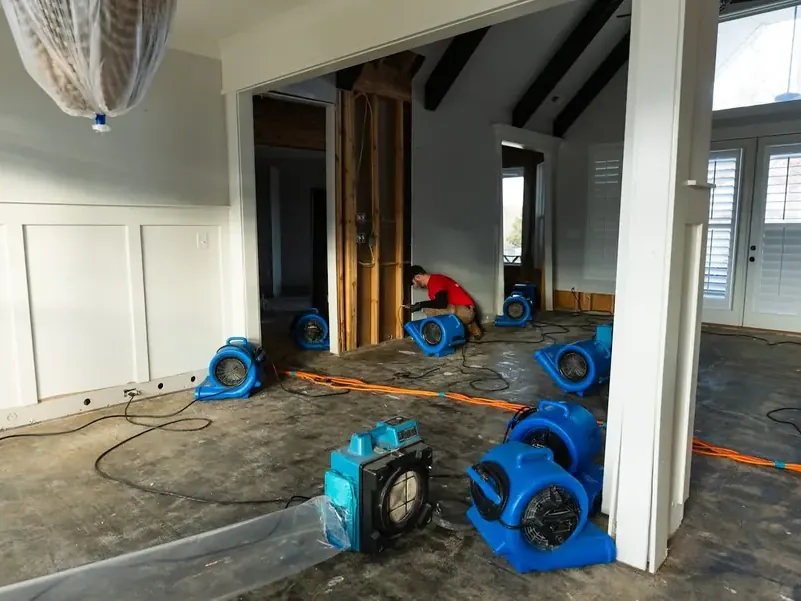
Extraction removes accessible liquid. Unsafe or unsalvageable porous material may require controlled removal, while cleanable hard surfaces receive appropriate treatment. Only then should drying equipment manage moisture in retained assemblies.
Air movement and dehumidification are arranged so they do not push contaminants into dry space. Repeat measurements show whether a wall, floor, or cavity is responding and whether access must change.
- Recover water from low points and edges.
- Bag debris through a protected route.
- Clean tools before leaving the work zone.
- Track identical material points through drying.
Finish with a factual street to room sequence
The closeout includes safe exterior observations, the original room boundary, extraction, material actions, cleaning, equipment, and final readings. It lists source or drainage repair reported by the proper party as a separate task.
The Jenkintown service hub covers pipe, sewage, roof, appliance, and other losses. A documented sequence helps select the right response without treating every wet room as an inlet problem.
- Pair final images with original room views.
- List removed and retained materials.
- Identify remaining repair needs.
- Do not promise a claim result.
Prepare for the next forecast without rewriting the first loss
After cleanup, an owner may want to reduce exposure before more rain or snowmelt. Temporary steps should focus on safe source protection and keeping known openings observed, while permanent drainage or building changes go to the appropriate professional and borough process.
The first loss file remains a record of what happened, not a prediction. A future storm may take a different route or produce no entry at all. Keeping the initial photographs, inlet observations, room map, and repair documents together gives the owner a reference for comparing future conditions.
Contents stored near the prior boundary can be moved to a dry, documented area. Shutoffs and emergency contacts can be identified. None of those preparations establish a flood zone or transfer responsibility for public or private drainage.
Preparation can include a simple observation checklist for the next storm. An owner can watch the prior exterior entry side from a safe indoor location, note whether an inlet appears obstructed, and record when any indoor change begins. There is no reason to stand in street water or approach a hazardous opening to improve the record.
If the next event produces a different pattern, the new map should stand on its own. Comparing two factual records may help a drainage or building professional, while assuming they share one cause could direct repairs toward the wrong location.
- Keep the previous room map available for comparison.
- Store vulnerable contents away from the known wet edge.
- Confirm safe shutoff access for indoor plumbing.
- Use qualified professionals for permanent drainage changes.
- Report public inlet debris through the borough process.