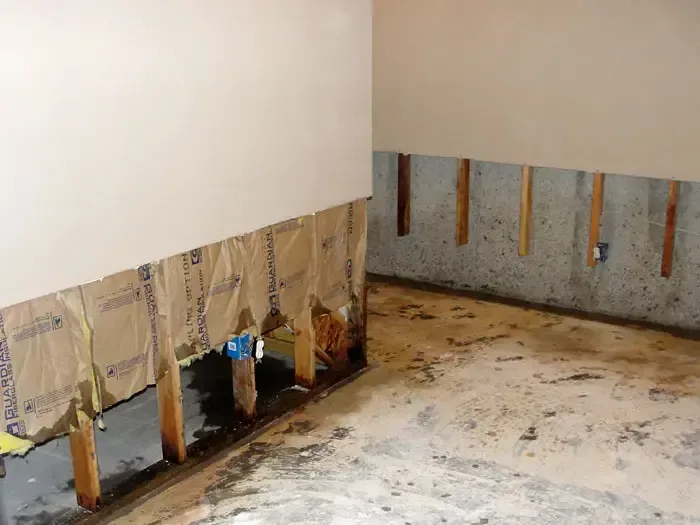
Trace runoff from the opening into the room
Wissahickon Creek and Sandy Run describe real local drainage. They do not show whether water reached a basement, crossed a threshold, entered through a roof, or came from plumbing during the same storm.
The Springfield storm water service starts with conditions at the building. The crew records exterior grade, openings, roof observations, drains, and the first interior marks, then checks the connected rooms for retained water.
- Take wide photographs of the building side involved.
- Record where water first appeared indoors.
- Note rainfall timing as context rather than proof.
- Keep plumbing and roof observations in separate entries.
Build a safe boundary around storm affected space
Water that travels outside may include soil, roadway residue, or sewage. Electrical exposure, slick surfaces, hidden floor changes, and unstable finishes add hazards. Occupants should not cross the area to retrieve belongings.
The crew identifies clean access and equipment routes. Contents are photographed before movement, and items touched by unsafe water stay separated from dry rooms until a handling decision is made.
- Avoid wet outlets, panels, appliances, and cords.
- Restrict rooms beneath sagging ceilings.
- Do not run fans across potentially contaminated areas.
- Move only dry portable items through a protected path.
Follow the route through edges and levels
Storm water often disappears beneath a finish before resurfacing at another edge. Technicians inspect thresholds, wall bases, stairs, utility penetrations, and adjoining rooms. Where the wet path reaches a lower level, the inspection continues through its floor edges, stored contents, and exposed wall finishes.
Readings create a material map with repeatable labels. In Wyndmoor, Flourtown, Erdenheim, or Oreland, the neighborhood name helps locate the assignment but cannot define construction.
- Compare flooring with suitable dry material.
- Check both sides of partitions along the route.
- Inspect below an upper level leak when safe.
- Document every access opening and finding.
Remove liquid and unsafe material before drying
Extraction reduces open water using tools chosen for the floor and access. Contaminated porous material may require removal, while cleanable retained surfaces receive appropriate treatment.
Once those steps are complete, air movement and dehumidification support the remaining assembly. Structural drying in Springfield uses repeat measurements instead of appearance as the endpoint.
- Recover water from seams and low points.
- Protect unaffected rooms during debris removal.
- Expose trapped layers when documented conditions require it.
- Keep sanitation and drying records distinct.
Monitoring should explain every adjustment
The initial setup reflects material type, exposed surface, room conditions, and safe airflow. Later readings show whether one edge is lagging or whether a section has reached a suitable comparison.
Technicians record devices by room and state why one was added, moved, or removed. If progress stalls, the response may involve better access, a boundary check, or a different arrangement rather than simply extending time.
- Return to identical labeled points.
- Record temperature and humidity with readings.
- Protect loose finishes from direct high airflow.
- Check nearby clean space for unintended moisture movement.
A final record supports repair without rewriting the cause
The closeout compares first and final conditions, names removed and retained materials, and lists remaining repair items. It can include findings from a roofer, plumber, or drainage professional without merging those assignments.
The Springfield water damage hub provides other source specific services. Selecting the correct one depends on property evidence, not on assuming every storm loss came from the watershed.
- Pair final images with original views.
- List closing readings for each affected material.
- Identify source correction reported by the proper trade.
- Leave claim decisions to the policy and carrier.
Watch for changes after the rain stops
The end of rainfall does not always end water movement inside an assembly. Water held beneath a finish may emerge at a seam, and an upper cavity may continue feeding a lower stain. New observations should be added to the map with their time and location rather than folded into the first boundary without explanation.
Exterior standing water can also recede before the interior edge is fully measured. That makes early photographs useful, but later readings still control material decisions. A change in one room can prompt inspection of a connected partition, stair, or lower ceiling without proving that every adjacent surface is wet.
Temporary source protection may change the pattern again. A roofer, plumber, or drainage professional should document work completed, while the mitigation log notes how indoor conditions responded. This parallel record helps distinguish source stabilization from evaporation and cleaning.
Follow up readings after a major adjustment help show whether the change worked. If an opening is enlarged, a device is relocated, or a wet material is removed, the next record should connect the resulting conditions with that action.
This step by step history prevents a final dry statement from standing alone. It lets the property owner see which area responded normally, which required added access, and why the remaining repair list differs from the first visual impression.
- Add new wet marks as separate dated observations.
- Recheck transitions after open water is removed.
- Compare rooms above and below along the suspected route.
- Record temporary protection by the trade that installed it.
- Do not close the map because exterior water has receded.