Structural Drying in Springfield Township, PA
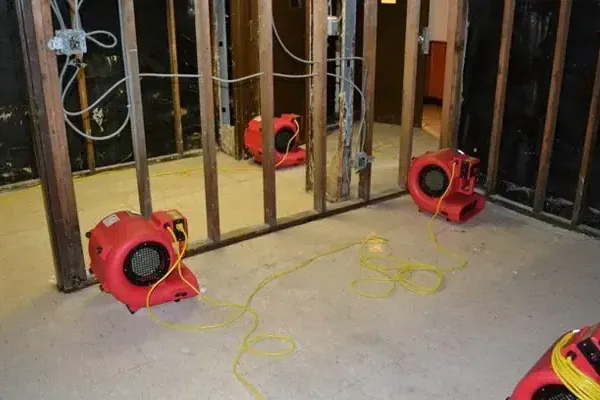
After extraction and material decisions, drying equipment is arranged around the actual wet assemblies, then adjusted from repeat readings rather than a preset calendar.
(888) 557-1733Plan a measured dry-out- Material moisture map
- Balanced equipment zones
- Repeatable completion targets
What to do the moment you find wet structural materials in Springfield Township
- 1Confirm the source is controlled
Drying cannot overcome continuing entry. Verify that plumbing, roof, appliance, drain, or outside-water issues have been safely addressed or isolated.
- 2Keep equipment areas clear
Do not move, cover, unplug, or redirect air movers and dehumidifiers without coordination, because each device serves a measured material zone.
- 3Report changing conditions
Notify the team about new water, unusual equipment behavior, loss of power, room access changes, or materials that begin to loosen.
- 4Preserve monitoring points
Leave marked surfaces accessible so repeat readings use the same locations.
How the crew handles wet structural materials
- AEstablish targets
Affected materials are mapped and compared with suitable dry references after extraction, cleaning, and removal decisions are complete.
- BBuild zones
Air movement, dehumidification, containment, and access are arranged around exposed wet surfaces and room conditions.
- CMeasure response
Technicians revisit marked points, assessment temperature and humidity, and adjust placement when materials respond unevenly.
- DVerify and remove
Equipment leaves when targeted retained assemblies meet supported goals and the closeout record identifies all completed measurement areas.
Structural drying begins after standing water is removed, the source is controlled, and contaminated or unsalvageable materials are resolved. Framing, masonry, foundations, and finish layers need separate moisture checks because each assembly can retain water differently. A property in Flourtown, Miquon, or Wyndmoor therefore receives a plan based on the assemblies actually found and their measured moisture.
What does structural drying & dehumidification cost in Springfield Township, PA?
Cost reflects wet surface area, material types, access, containment, equipment zones, power considerations, environmental control, monitoring visits, and any change in material response. Concealed layers and uneven response may require setup changes.
Contained area
$1,500 to $3,849
- Focused moisture map
- Compact equipment zone
- Repeat material checks
Several rooms
$3,849 to $7,150
- Multiple wet assemblies
- Broader climate control
- Several monitoring areas
Complex loss
$7,150 to $9,500+
- Difficult concealed access
- Large equipment plan
- Extended measurement record
Drivers: the water category, the square footage, the material class and how fast drying started. For a planning range, try the water damage cost calculator.
How the team handles wet structural materials in Springfield Township
- 1
Moisture mapping
The tech who does the walkthrough maps wet materials with thermal imaging and pinless meters first.
- 2
Extraction
The extraction crew pulls standing water out with truck-mounted extraction, so it leaves the building.
- 3
Air movers and LGR
Air movers are set to each room's evaporation load; LGR dehumidifiers pull the moisture from the air.
- 4
Dry verification
Crews log readings daily and pull equipment once wet material is within 2 to 4 points of a dry reference.
Describe the source, wet rooms, and any immediate safety concerns.
(888) 557-1733Arrange a moisture mapping visitA moisture map defines each equipment zone
Technicians inspect connected walls, floors, ceilings, cavities, and contents to locate elevated readings. Suitable dry materials provide comparison points. The map separates wet areas from protected rooms and shows where access is needed before equipment can work effectively.
- Every monitoring point is tied to a material and location.
- Room conditions are recorded along with material readings.
- Barriers and concealed layers are considered before placement.
- Unsafe or contaminated surfaces are resolved before airflow is directed across them.
Air movement and dehumidification do different work
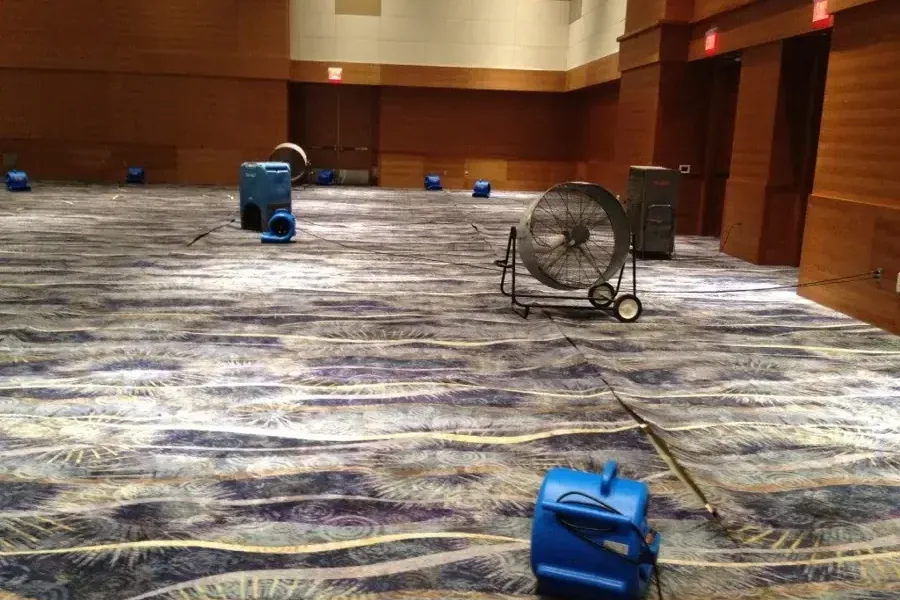
Air movers encourage evaporation at stable wet surfaces. Dehumidification removes released vapor from the managed environment. More airflow is not automatically better: placement must avoid damaged finishes, contamination transfer, and short paths that miss sheltered areas.
Near Oreland station, Erdenheim, or Springfield Mill, equipment quantities are not selected from the address or community. The drying team considers wet surface area, room configuration, material accessibility, temperature, humidity, and how the system performs after operation begins.
Monitoring turns a setup into a controlled process
Repeat visits compare the same measurement points and assess environmental conditions. A falling reading may support equipment movement or reduction. A stalled location can indicate blocked airflow, an enclosed wet layer, an unresolved source, or a material that needs another decision.
- Equipment changes are documented by zone.
- New water entry triggers reassessment rather than routine continuation.
- Contents and occupant access are considered during adjustments.
- Drying goals remain tied to appropriate comparison materials.
Completion requires evidence from retained materials
Visual appearance and touch cannot show all retained moisture. Final readings demonstrate whether targeted materials have reached the chosen condition and whether equipment can leave. The main structural drying service explains the broader method, while the Springfield Township hub links drying to source-specific cleanup.
Technicians also compare sheltered corners with open surfaces to determine whether equipment is serving the entire assembly. A persistent difference can support new access, redirected airflow, or a separate material decision before closeout.
Equipment amperage, room access, and occupant needs are considered whenever a drying zone is revised. The owner should know which doors need to remain in their planned positions and which equipment must stay accessible. These room instructions help preserve the drying arrangement between visits and make changed conditions easier to report.
Structural Drying and Dehumidification coverage in Springfield Township
Structural drying serves Flourtown, Miquon, Wyndmoor, Oreland, and Erdenheim, with no invented assumption about local framing, masonry, foundations, or finishes. Equipment routes and occupied spaces are included in zone design.
Related water damage services in Springfield Township
Questions about measured structural drying
Why is extraction completed before drying equipment is emphasized?
Liquid removal reduces the moisture load more efficiently than evaporation alone. Drying then addresses water held within stable materials and the managed air.
What does a dehumidifier do?
It removes water vapor released into the work environment. This supports continued evaporation and helps prevent the room air from becoming the limiting condition.
Are more air movers always helpful?
No. Placement depends on surface area, material condition, access, contamination, and airflow paths. Poorly directed air can miss wet zones or disturb unsafe materials.
How are dry targets selected?
Technicians compare affected materials with suitable unaffected references and consider the actual assembly. One universal number does not describe every building material.
What causes a reading to stop improving?
Possible reasons include hidden wet layers, blocked airflow, unsuitable temperature, continuing entry, or a material that needs access or removal. The team investigates before adjusting.
Can occupants move the equipment?
Equipment should stay in its documented position unless the team coordinates a change. Moving or covering a device can disrupt the balance of a drying zone.
How is completion documented?
The closeout record identifies monitored materials, reference points, environmental conditions, equipment changes, final readings, and any remaining repair or reconstruction work. Those records explain why each device was removed. Closeout notes also identify any materials left for later repair.
Turn equipment placement into a measured process
Effective drying balances material access, evaporation, vapor removal, repeat readings, and clear completion criteria.