Ceiling Leak Water Damage in Springfield Township, PA
A ceiling stain marks where water became visible, not necessarily where it began, so the response protects the room and traces the overhead route with measurements.
(888) 557-1733Assess the overhead water path- Overhead safety zone
- Source-path tracing
- Cavity drying decisions
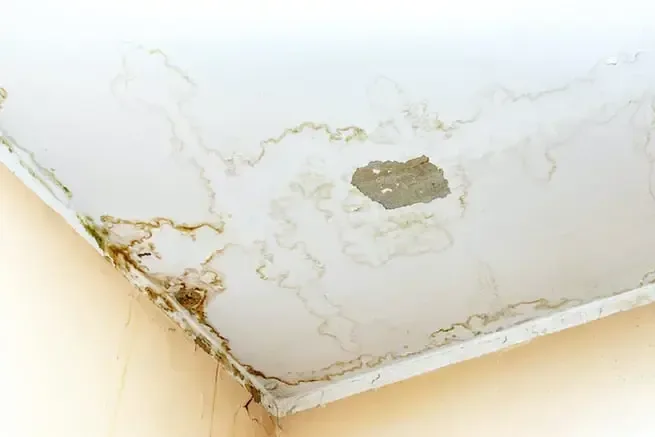
What to do the moment you find an active ceiling leak in Springfield Township
- 1Clear the area below
Move people and pets away from bulging, sagging, dripping, or crumbling ceiling finishes and keep the floor beneath them unobstructed.
- 2Avoid electrical contact
Do not operate wet fixtures, switches, fans, or nearby equipment. Seek appropriate electrical assessment when water reaches powered components.
- 3Do not release trapped water
Leave puncturing and controlled access to trained personnel who can protect the room and evaluate what the finish is holding.
- 4Photograph from the perimeter
Capture the stain shape, drip points, surrounding walls, contents, and rooms above without standing beneath the damaged section.
How the crew handles an active ceiling leak
- AEstablish safety
The room is restricted around unstable finishes, electrical concerns, contents, and any point where water or debris may fall.
- BTrace upward
Readings and accessible observations connect the ceiling appearance with cavities, upper rooms, fixtures, pipes, or confirmed weather entry.
- COpen only as supported
Damaged material and trapped wet layers receive controlled access while stable dry sections remain protected from unnecessary disturbance.
- DDry and verify
Exposed retained materials are monitored against reference points before the area moves to repair and finish replacement.
Water appearing on a ceiling may come from plumbing, a fixture, equipment, or weather entry. The visible stain can sit away from the original opening after moisture follows framing or seams. In a property near Carson College for Orphan Girls, Flourtown, or Wyndmoor, the cleanup begins by creating a safe area below and identifying the route from evidence rather than location.
What does ceiling leak water damage cost in Springfield Township, PA?
Cost reflects source location, overhead access, affected area, insulation, finish stability, water removal, contents protection, selective opening, equipment, and required monitoring. Floor protection and cavity insulation can increase required work.
Contained area
$1,200 to $3,045
- Focused ceiling section
- Room protection
- Limited cavity access
Several rooms
$3,045 to $5,655
- Connected overhead spread
- Multiple finish areas
- Several drying points
Complex loss
$5,655 to $7,500+
- Extensive cavity moisture
- Broad controlled removal
- Longer overhead monitoring
Drivers: the water category, the square footage, the material class and how fast drying started. For a planning range, try the water damage cost calculator.
How the team handles an active ceiling leak in Springfield Township
- 1
Moisture mapping
The tech who does the walkthrough maps wet materials with thermal imaging and pinless meters first.
- 2
Extraction
The extraction crew pulls standing water out with truck-mounted extraction, so it leaves the building.
- 3
Air movers and LGR
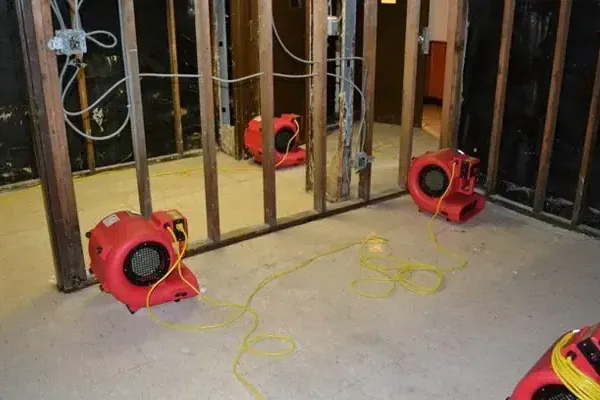
Air movers are set to each room's evaporation load; LGR dehumidifiers pull the moisture from the air.
- 4
Dry verification
Crews log readings daily and pull equipment once wet material is within 2 to 4 points of a dry reference.
Describe the source, wet rooms, and any immediate safety concerns.
(888) 557-1733Request an overhead surveyThe room below needs immediate protection
Swollen or sagging finishes may release water and material without warning. Occupants should stay clear, especially when fixtures or electrical components are wet. Movable dry contents can be shifted from outside the fall area, while soaked items remain documented for controlled handling.
- Do not puncture or press a bulging ceiling.
- Keep ladders and ordinary electrical tools out of the wet zone.
- Photograph staining and room relationships from a safe position.
- Report active dripping and any rooms above the appearance.
Source tracing moves above and outward
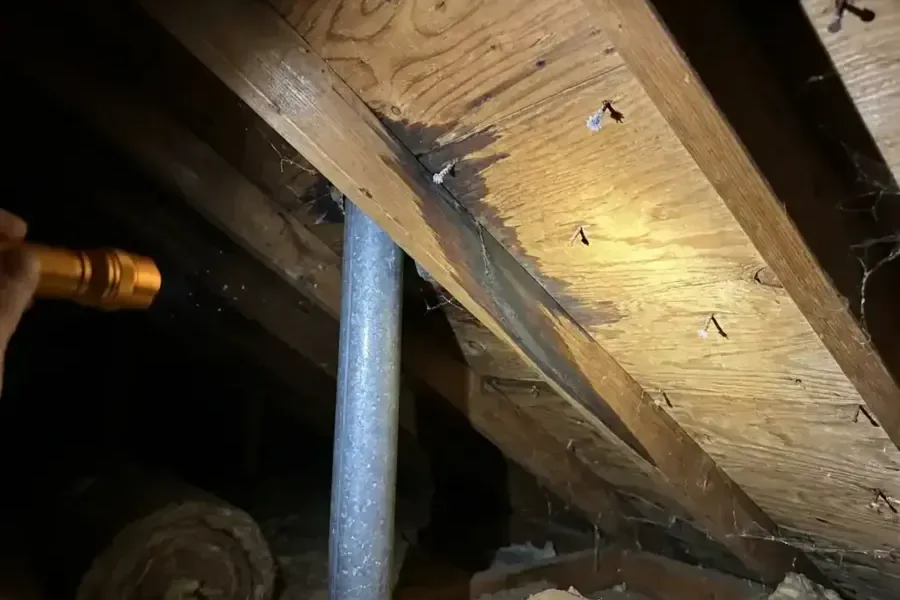
Technicians compare the visible mark with readings in nearby ceiling sections, upper walls, and accessible areas above. A plumbing provider handles pipe or fixture repair. A roofing provider handles confirmed exterior defects. Restoration focuses on released water, damaged finishes, cavity access, and drying.
Properties near Oreland station, Springfield Mill, or Church Road are not assigned a source from the surrounding area. The observed assembly, wet pattern, and repair findings establish the path. If several potential sources exist, the record keeps each clue distinct until evidence supports one.
Overhead materials receive condition-based decisions
Finish that has lost strength or holds contaminated water may require careful removal. Stable sections may allow drying when the cavity is accessible and insulation or trapped layers do not prevent moisture release. Any opening is contained and limited to the supported wet boundary.
- Floor protection catches controlled debris and remaining water.
- Removed pieces are documented by room and location.
- Air movement is directed at exposed stable materials.
- Dehumidification controls moisture released into the room.
Readings determine when the cavity is ready
Marked points show whether remaining framing and finishes respond over time. Equipment can be repositioned as the wet area contracts. Final documentation separates source repair, ceiling removal, drying, and later finish replacement. Read the main ceiling leak service or use the township cleanup hub to connect overhead work with roof, pipe, or structural drying needs.
Contents beneath the opening are photographed again after protection or relocation, and the upper cavity edge is checked so the completion record covers both overhead material and the occupied room below. A room sketch identifies where inspection openings remain overhead. Keeping their locations with the closing photographs helps the repair contractor find the work area and protect furniture when ceiling finishes are restored.
Ceiling Leak Water Damage coverage in Springfield Township
Ceiling leak cleanup serves Flourtown, Wyndmoor, Oreland, Erdenheim, and areas near Church Road, with the source and wet boundary traced at each property. Floor protection and safe room access are included in planning.
Related water damage services in Springfield Township
Questions about water above a ceiling
Should a bulging ceiling be punctured to drain it?
No. Trapped water and weakened material can fall suddenly. Keep clear and let trained personnel establish floor protection, safe access, and controlled release.
Does the stain identify the leak source?
Not always. Water can travel along framing, seams, and penetrations before appearing. Inspection above and moisture readings help connect the route.
Who repairs plumbing above the ceiling?
A qualified plumbing provider corrects a pipe or fixture source. Restoration addresses released water, affected finishes, cavity access, drying, and documentation.
Can a stained ceiling remain in place?
Condition matters. Stable clean-water-affected material may sometimes dry, while weakened, contaminated, delaminated, or inaccessible layers may require removal.
How is insulation evaluated?
The crew considers type, wetness, contamination, access, and whether it blocks drying. Decisions rely on observed material rather than an assumed building assembly.
Why measure nearby walls and flooring?
Overhead water may descend inside walls or drip onto contents and floors. Checking connected surfaces prevents the scope from stopping at the ceiling mark.
When is the room ready for finish repair?
After the source is corrected, unstable material is resolved, retained assemblies meet moisture targets, and the completed drying record supports moving forward. Final photographs record the safe, dry work boundary. Final material notes identify each retained overhead surface after drying.
Treat the stain as a clue, not the whole boundary
A ceiling response joins source tracing, controlled access, room protection, cavity drying, and final measurements.