Roof Leak Water Damage in Springfield Township, PA
When inspection confirms roof entry, interior cleanup follows the route through insulation, ceilings, walls, contents, and floors while exterior repair remains a separate scope.
(888) 557-1733Trace the roof-water route- Interior path mapping
- Controlled cavity access
- Measured material drying
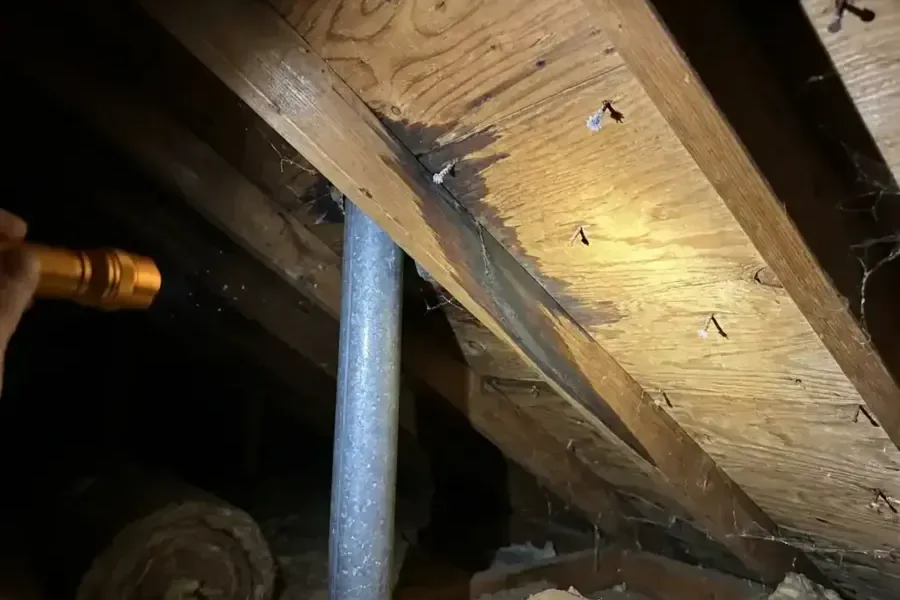
What to do the moment you find a roof leak in Springfield Township
- 1Stay below no damaged ceiling
Keep occupants away from sagging finishes, wet fixtures, loose material, and active drips until the overhead condition is assessed.
- 2Avoid unsafe roof access
Do not climb onto a wet or storm-damaged roof. Contact the appropriate roofing provider for inspection and safe temporary protection.
- 3Document interior clues
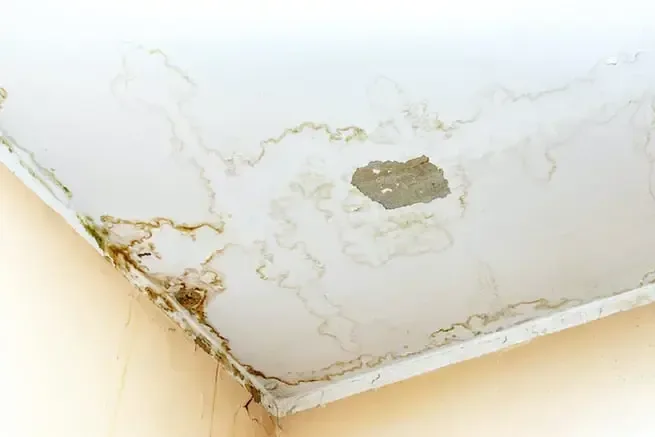
Photograph stains, room relationships, contents, wall paths, and floor water before cleanup alters the visible pattern.
- 4Protect unaffected belongings
Move dry portable contents from outside the wet zone, but leave soaked or overhead-threatened items for controlled handling.
How the crew handles a roof leak
- AConfirm and protect
Roof findings, interior patterns, and safe temporary measures establish the source while unstable rooms remain restricted.
- BMap the inside
Technicians trace moisture through accessible insulation, ceilings, walls, contents, and floors until dry comparison points define the boundary.
- CCreate supported access
Extraction and selective removal expose trapped wet layers while unaffected finishes stay outside the work zone.
- DMonitor retained materials
Environmental conditions and repeat readings direct equipment changes and document when the interior is ready for repair.
Rain and an interior stain can occur together without proving the roof is the source. A roofing inspection, accessible observations, and moisture patterns must support that conclusion. After roof entry is confirmed, the restoration scope follows water through the interior. A property near Springfield Mill, Wyndmoor, or Erdenheim is evaluated from its actual assembly, with no roof material or age inferred from location.
What does roof leak water damage cost in Springfield Township, PA?
Price depends on interior spread, overhead access, insulation, finish stability, contents protection, extraction, selective removal, equipment areas, and the monitoring needed after roof correction. Temporary protection and renewed entry can change monitoring needs.
Contained area
$1,500 to $4,024
- Focused interior route
- Room protection
- Limited overhead access
Several rooms
$4,024 to $7,475
- Connected ceiling spread
- Multiple finish sections
- Several drying zones
Complex loss
$7,475 to $10,000+
- Broad concealed moisture
- Extensive material access
- Longer interior monitoring
Drivers: the water category, the square footage, the material class and how fast drying started. For a planning range, try the water damage cost calculator.
How the team handles a roof leak in Springfield Township
- 1
Moisture mapping
The tech who does the walkthrough maps wet materials with thermal imaging and pinless meters first.
- 2
Extraction
The extraction crew pulls standing water out with truck-mounted extraction, so it leaves the building.
- 3
Air movers and LGR
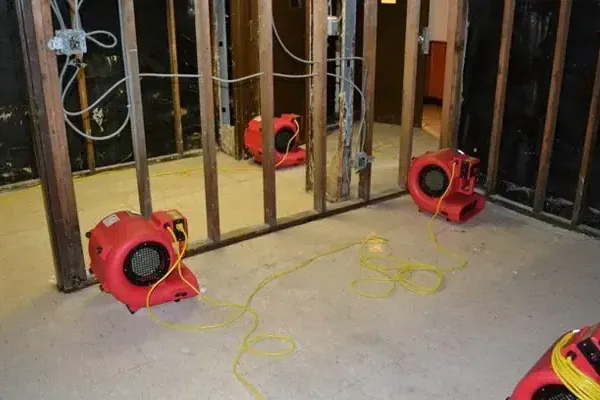
Air movers are set to each room's evaporation load; LGR dehumidifiers pull the moisture from the air.
- 4
Dry verification
Crews log readings daily and pull equipment once wet material is within 2 to 4 points of a dry reference.
Describe the source, wet rooms, and any immediate safety concerns.
(888) 557-1733Arrange an interior path surveyTemporary protection comes before lasting drying
Active entry can rewet materials and interrupt progress. Safe emergency protection and permanent roof correction belong to the appropriate roofing provider. Indoors, occupants stay away from sagging ceilings, wet fixtures, loose finishes, and water collecting near electricity.
- Photograph stains, drips, and affected contents from outside the fall area.
- Note when changes occur during rain without presenting timing as proof.
- Move dry portable items away from the wet boundary.
- Leave overhead openings to personnel prepared for falling water and debris.
The interior route may not be vertical
Water can travel along roof components, framing, insulation, and ceiling surfaces before appearing. Technicians check the visible point, accessible space above, nearby walls, and the floor below. Measurements extend outward until unaffected comparison materials are found.
Near Oreland station, Flourtown, or Church Road, the same evidence standard applies. Wet insulation and enclosed layers may require access, while stable finish outside the moisture boundary remains protected. The goal is not broad demolition; it is enough visibility and airflow to resolve the confirmed path.
Material condition determines the interior scope
Standing water is extracted, wet contents are documented, and unstable or contaminated material is handled under controlled conditions. Clean, stable components may be dried when the assembly can release moisture. Delaminated finishes or layers that block access can require selective removal.
- Floor protection controls water and debris from overhead work.
- Marked points keep daily comparisons consistent.
- Dehumidification manages vapor from exposed materials.
- Air movers serve stable surfaces without disturbing weakened finishes.
Completion covers the inside, not the roof warranty
Final readings document the retained interior materials. The file distinguishes roof work, emergency protection, extraction, removal, drying, and finish replacement. Assess roof leak cleanup for main service context, or visit the Springfield Township hub for ceiling and storm-related options.
When exterior work finishes, technicians compare the repaired entry area with interior monitoring points. That follow-up helps identify renewed moisture, confirms which materials belong to the active drying zone, and prevents old staining from being treated as a new measurement.
Protected floor and contents areas are checked before equipment leaves. The owner receives separate notes for temporary weather protection, roofing repair, and interior restoration. A dry ceiling can be ready for finish work while the exterior contractor still has permanent repairs to complete.
Roof Leak Water Damage coverage in Springfield Township
Roof leak mitigation serves Wyndmoor, Erdenheim, Flourtown, Oreland, and properties near Church Road after roof entry is confirmed from property-specific evidence. Interior routes and occupied areas shape every work boundary.
Related water damage services in Springfield Township
Questions after roof water enters
Does a ceiling stain during rain prove a roof leak?
No. Timing is useful context, but plumbing and other entry routes remain possible. Roof findings and interior moisture patterns should support the source conclusion.
Who installs temporary roof protection?
A qualified roofing provider should handle roof access and protection. Restoration personnel manage interior water, affected materials, drying, and related documentation.
Can wet insulation remain in the cavity?
That depends on insulation type, contamination, condition, access, and whether moisture can be removed effectively. Inspection determines the appropriate material decision.
Why is the wall below a roof stain checked?
Water may descend inside a cavity before becoming visible. Testing connected walls and floors helps define the complete interior route.
Must all stained ceiling material be removed?
Not automatically. Structural stability, delamination, contamination, trapped layers, and measured drying potential determine whether a section remains or is opened.
What happens if rain returns during drying?
The team documents any new entry and reassesses readings. Effective progress depends on reliable temporary protection or completed source repair.
How are roof work and restoration shown in records?
Roof findings and repairs remain separate from interior extraction, material removal, equipment, monitoring, and reconstruction so each scope stays understandable. Final interior readings do not warrant exterior work. Final room photographs preserve the completed interior condition for the property record.
Dry the route after roof entry is controlled
Interior mitigation should stay coordinated with roof correction while retaining separate material, equipment, and completion records.